
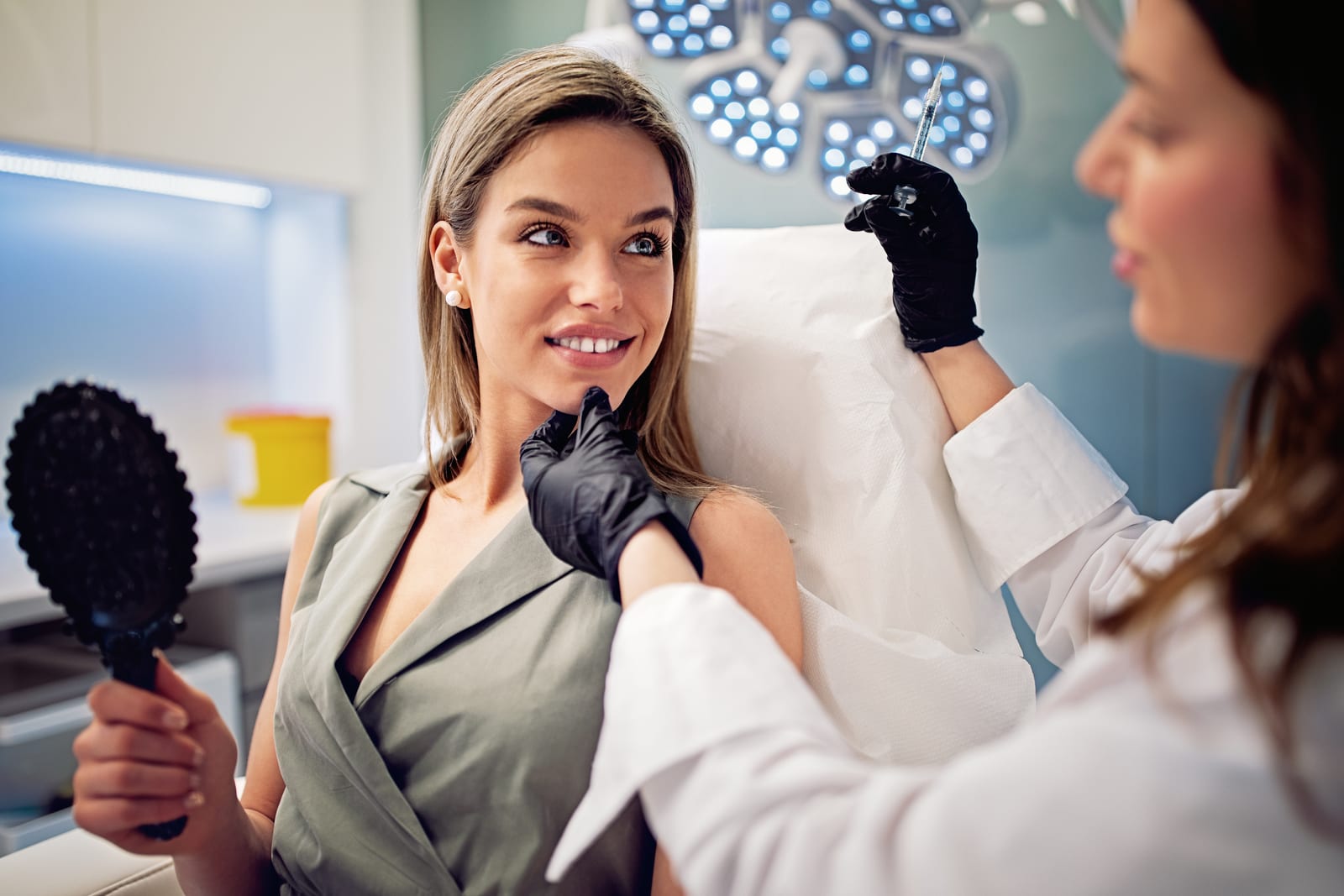
Nano Fat Stem Cell Therapy in Bellevue, WA
Surgeon-administered autologous nano fat protocol for facial regeneration and skin quality.
- Surgeon-Led
Every protocol reviewed through a fellowship-trained facial plastic surgeon's anatomical lens.
- Full Modality Array
Radiofrequency, ultrasound, IPL, picosecond, pulsed-dye, and a complete injectable menu in-house.
- Hospitality-Led
Founded in 2022 around a comfort-first, homey clinic standard — quiet luxury without corporate distance.
- Bellevue Crossroads
15600 NE 8th St, Suite A-8 — minutes from Mercer Island, Kirkland, and Redmond.
What Nano Fat Is
Nano fat refers to a mechanically micro-processed lipoaspirate. A small volume of fat is harvested from a donor site (typically the thigh, flank, or lower abdomen) through a small-bore cannula under local anesthesia. That harvested tissue is then emulsified and filtered down to a fine fraction — small enough to pass through a fine-gauge needle — and reintroduced into the treatment area in the same visit.
Nano fat is an autologous regenerative protocol — your own fat tissue, harvested under local anesthesia, mechanically processed in-clinic, and reintroduced as a micro-fat fraction rich in the body’s own adipose-derived regenerative cells. At Sun Aesthetic Clinic, the protocol is run by a fellowship-trained facial plastic surgeon whose subspecialty training includes fat-grafting fundamentals at the surgical level. The page below explains what the protocol is, what it is honestly for, and — just as importantly — what it is not.
What Nano Fat Is
Nano fat refers to a mechanically micro-processed lipoaspirate. A small volume of fat is harvested from a donor site (typically the thigh, flank, or lower abdomen) through a small-bore cannula under local anesthesia. That harvested tissue is then emulsified and filtered down to a fine fraction — small enough to pass through a fine-gauge needle — and reintroduced into the treatment area in the same visit. There is no synthetic gel placed and nothing left behind that is not biologically yours.
The clinically meaningful content of that fine fraction is the population of adipose-derived regenerative cells (sometimes called “stem cells” in the regenerative-medicine literature) that travels with the processed micro-fat. These cells are not lab-cultured or lab-expanded — the protocol uses them in their unmodified, same-procedure state. That is an important distinction we come back to below.
This service sits inside our Medical Injectables category at the most clinically considered end of the menu — a protocol that is selected when the indication calls for regenerative biology rather than for surface-volume placement.
Why a Surgeon-Led Clinic for Nano Fat
The harvest step is what makes nano fat a fundamentally surgical-adjacent protocol, even when the whole visit runs under local anesthesia. Cannula choice, harvest depth, donor-site selection, and the contour integrity of the donor field are surgical-fellowship-level questions, not injectable-bar questions. The same is true of the reinjection phase — placement plane, micro-deposit cadence, and anatomical mapping of regenerative deposits all draw on the fat-graft fundamentals taught in facial-plastic-surgery training.
Albert Yang — our fellowship-trained facial plastic surgeon (AAFPRS, with fellowship training at Emory University and Premier Image Cosmetic and Laser Surgery Center, and prior head-and-neck reconstructive training at UNLV) — anchors the protocol’s clinical standard. Facial-plastic fellowship work routinely includes surgical fat-grafting technique, which maps directly onto a nano-fat workflow: the harvest is a small graft, the reinjection follows graft-handling rules, and the anatomical precision required at both ends is the surgical kind.
Dr. Jay Sun, MD — founder and medical director — supports the protocol on the patient-comfort layer. His anesthesiology and regenerative-medicine background informs both the local-anesthesia protocol at the donor site and the broader regenerative framing the clinic brings to autologous protocols.
Meet your fellowship-trained surgeon
Application Areas — Where Nano Fat Maps Best
Nano fat is not a volume-replacement product. It is a regenerative-quality protocol, used in selected cases where the question is about tissue character rather than tissue volume.
- Skin quality and texture. The most consistent indication. Diffuse skin-quality concerns — thin or crepey character, dullness, fine surface change — where the goal is a tissue-quality improvement layered over what other surface protocols already deliver.
- Periorbital rejuvenation. Fine periorbital change in selected candidates, where the under-eye and lateral-canthal tissue can benefit from a regenerative micro-deposit rather than from a hyaluronic acid placement. This is one of the most anatomically demanding territories on the face and one where surgeon-led judgment on candidacy is non-negotiable.
- Fine-line softening. As a layered component of a longer plan rather than a standalone fine-line treatment — read against surface modalities and biostimulators during consultation.
- Scar revision. Selected scar territory — atrophic and tethered scars where the goal is improved tissue character around and within the scar. Reviewed case by case.
For structural volume restoration, the right answer is more often Sculptra (collagen-stimulating filler), Radiesse, or hyaluronic acid Dermal Fillers in Bellevue — not nano fat. Your consultation maps the indication to the right protocol rather than to the most regenerative-sounding one.
Protocol Expectations — One Visit, Layered Workflow
The visit runs as a single in-clinic appointment, typically 90 to 120 minutes from start to finish.
- Donor-site harvest. A small donor field — usually thigh, flank, or lower abdomen — is anesthetized with local infiltration. A small-bore cannula collects the volume of fat the protocol calls for. The donor site is closed with steri-strips or a small absorbable suture as the case requires.
- In-clinic processing. The harvested fat is mechanically emulsified and filtered down to the fine nano-fat fraction. Processing happens during the same visit; nothing is sent out, nothing is cultured, nothing is stored.
- Targeted reinjection. The processed fraction is reintroduced through fine-gauge needles into the planned treatment areas, with placement depth and micro-deposit cadence mapped to your anatomy.
- Recovery. Mild soreness and bruising at the donor site for the first several days. Treatment-area swelling for the first 24 to 72 hours is typical. Most patients return to normal activity the day after the visit; demanding workouts wait a week.
- Result window. Surface change emerges gradually as the regenerative response integrates — typically over weeks to a few months. Nano fat is a longitudinal protocol, not a same-day reveal.
The session may be planned as a standalone visit or as part of a layered plan that sequences nano fat with surface or structural protocols on a calendar that the consultation maps out.
What This Protocol Is Not — The Honest Frame
This is the most important section on the page. Nano fat is an emerging clinical-aesthetic protocol, and the regenerative-medicine landscape carries more than its share of overclaim. We want patients to arrive with accurate expectations.
- This is not lab-cultured stem cell therapy — and that is what makes it safe. The adipose-derived regenerative cells used in nano fat are the cells your own tissue carries on the day of the visit — used in their unmodified state, in the same procedure. Because everything reintroduced comes from your own body, there is no donor material and no foreign product — one of the safest risk profiles in regenerative aesthetics. No cell line is grown. No cells are expanded in a lab. The “stem cell” in the protocol name refers to the regenerative-cell content of your own micro-fat fraction.
- If structural volume is needed, facial fat transfer can be performed at the same time. Nano fat is a tissue-quality protocol; when the indication also includes meaningful volume loss, a facial fat transfer — placing your own structural fat where the architecture needs it — can be performed in the same procedure, so tissue quality and volume are addressed in a single plan.
- This is not a guaranteed-outcome treatment. Regenerative response is biological; the curve of your individual result depends on your tissue, your baseline, and how the integrated response unfolds over weeks to months.
If a clinic describes nano fat in ways that suggest cultured stem cells, FDA approval as a cell-therapy product, or curative outcomes for a specific condition, the framing is not accurate to what the protocol is.
How Nano Fat Pairs With Other Protocols
Nano fat is most often deployed as a layered component inside a longer plan rather than as a standalone intervention. Common pairings:
- With microneedling or the Vampire Facial technique for surface-quality refinement on a complementary timeline.
- With PRP (related regenerative protocol) for a compounded regenerative effect — autologous platelets paired with autologous adipose-derived regenerative cells. Sequencing is mapped during consultation.
- With Sculptra or Radiesse in adjacent territory when structural volume restoration is the answer for one region and tissue-quality refinement is the answer for an adjacent one.
- With Exosome Therapy when the broader regenerative plan calls for it. Reviewed against indication and candidacy rather than booked from a menu.
This page sits alongside the concern landings most often resolved through regenerative-injectable work — Facial aging & sagging treatment, and, in selected scalp protocols where the indication fits, Hair restoration treatment. Scalp candidacy is reviewed individually; not every regenerative inquiry routes there.

The First Step Toward Natural-Looking Results
Nano fat is the most clinically considered protocol on the medical injectables menu — the one where surgeon-led candidacy review carries the most weight and where the honest frame matters as much as the protocol itself. The consultation is the right place to map whether nano fat is the answer for your concern, or whether another protocol fits the indication better.
Frequently Asked
Is this stem cell therapy?
Not in the lab-cultured cell-therapy sense. Nano fat uses the adipose-derived regenerative cells (sometimes called "stem cells" in the regenerative-medicine literature) that travel with your own micro-processed fat fraction. The cells are not grown, expanded, or modified — they are reintroduced in their unmodified state during the same visit. The "stem cell" in the service name refers to that regenerative-cell content, not to a cultured cell product.
Is nano fat FDA-approved?
Nano fat as delivered in US aesthetic settings is an autologous same-procedure protocol — your own tissue, processed and reintroduced in a single visit. Because the material comes entirely from your own body, the donor-material risk class is removed altogether, and the protocol stays on the right side of US regulatory framing.
Where does the fat come from?
A small donor site on your own body — most commonly the thigh, flank, or lower abdomen. The donor field is selected during your consultation based on tissue availability and your contour preferences. Harvest is done under local anesthesia in the same visit as the reinjection.
What is recovery like at the donor site?
Mild soreness, bruising, and mild swelling at the donor area for several days. Most patients return to normal activity the day after the visit. Demanding workouts wait about a week. The donor site is selected and managed so the contour change reads as nothing changed.
When do I see results?
Gradually. Treatment-area swelling resolves over the first three to seven days; the regenerative response then integrates over weeks to a few months. The realistic window for the integrated tissue-quality change is roughly six to twelve weeks, with continued refinement after that.
How long do results last?
Because the protocol works through your own regenerative biology rather than through a placed gel, the result reads as integrated tissue change rather than as a product that wears off. Longitudinal data on nano fat is still maturing as a clinical literature. Your consultation maps a realistic expectation window against your individual baseline rather than promising a fixed durability.
Who is a candidate?
Patients whose indication is genuinely tissue-quality or regenerative — skin character, periorbital quality, fine-line softening, selected scar territory — rather than primarily volume loss. Candidacy review covers donor-site availability, treatment-area anatomy, and how nano fat fits against other protocols on the menu. Not every patient who asks about nano fat is the right candidate; we will say so directly when another protocol is the better answer.
Is pricing published on the site?
Pricing is shared in your consultation rather than on the page — protocol-driven, scaled to the volume of harvest and the treatment area mapped, and reviewed against your goals. Financing options are available through our financing page.
Related treatments in your category.
Botox & Wrinkle Relaxers
Wrinkle-relaxer treatments — Botox, Dysport, and refined neuromodulator alternatives — placed with anatomical precision by a fellowship-trained surgeon's lens.
Learn more Medical InjectablesDermal Fillers
Hyaluronic acid filler placement for lips, midface, jawline, and structural rejuvenation — calibrated to anatomy, never templated.
Learn more Medical InjectablesSculptra
Poly-L-lactic acid biostimulator that gradually restores collagen architecture over a series of treatments.
Learn more Medical InjectablesRadiesse
Calcium hydroxylapatite biostimulator for jawline contour, hand rejuvenation, and structural lift.
Learn more Medical InjectablesPRP / DermaPRP
PRP (platelet-rich plasma) is our autologous regenerative therapy for skin, hair, and scar revision. When structural volume is needed, it is transformed into DermaPRP — a biofiller injected like a dermal filler.
Learn morePricing is shared in consultation.
Our pricing is a function of the protocol your anatomy actually needs — not a menu line item. We share specifics during your complimentary consultation, where every cost is contextualized inside the plan it belongs to. Financing options are available for protocols of greater scope.
